
Mantén Tu Motor Vivo: Por Qué los Cambios Regulares de Aceite Son un Mantenimiento Preventivo Crucial

Lee Myles Auto Care & Transmissions • August 6, 2025

Share this article

Probablemente lo escuches todo el tiempo: "¡Cambia el aceite de tu coche!" Pero, ¿por qué esta tarea aparentemente sencilla es tan importante para la salud de tu vehículo? En Lee Myles Auto Care & Transmissions en Berks County, PA, estamos aquí para explicar por qué un cambio regular de aceite no es solo una tarea más, sino la columna vertebral absoluta del programa de  mantenimiento preventivo  de tu coche. ¡Piénsalo como la sangre vital de tu motor! 

¿Qué Hace Realmente el Aceite de Motor? ¡Más de lo que Imaginas! 

El motor de tu coche es un sistema complejo de piezas metálicas en movimiento, que crea una inmensa fricción y calor. Ahí es donde entra en juego el aceite de motor. Sus funciones principales son: 

  1. Lubricación:  El aceite crea una fina capa entre las piezas móviles (como pistones y cigüeñales), reduciendo la fricción y evitando que se rocen entre sí. Sin una lubricación adecuada, estas piezas se desgastan increíblemente rápido, lo que lleva a costosas reparaciones del motor.  
  2. Enfriamiento : Lo creas o no, el aceite de motor ayuda a disipar el calor generado por fricción y combustión. Transporta el calor lejos de los componentes críticos, evitando que el motor se sobrecaliente.  
  3. Limpieza:  A medida que el aceite circula, recoge suciedad, lodo y partículas metálicas microscópicas, subproductos de la combustión y el desgaste. Mantiene estos contaminantes en suspensión hasta que puedan ser eliminados durante un cambio de aceite.  
  4. Prevención de la Corrosión:  El aceite contiene aditivos que ayudan a prevenir la oxidación y la corrosión, protegiendo los componentes metálicos vitales dentro de tu motor. 

Por Qué el Aceite "Sucio" Es un Gran Problema para Tu Motor 

Con el tiempo, el aceite de motor se degrada. Sus aditivos se agotan, su viscosidad cambia y se satura con todos los contaminantes que ha recogido. Cuando el aceite se vuelve viejo y sucio: 

  • Pierde sus propiedades lubricantes:  La fricción aumenta, lo que provoca un mayor desgaste en las piezas cruciales del motor. Este es un camino directo al desgaste prematuro del motor.  
  • Su capacidad de enfriamiento disminuye:  Tu motor funciona a una temperatura más alta, lo que aumenta el riesgo de sobrecalentamiento y los daños asociados.  
  • Se convierte en lodo:  La suciedad y los residuos pueden agruparse, formando un lodo espeso que obstruye los conductos de aceite. Esto puede privar a las piezas de lubricación por completo, lo que lleva a una falla catastrófica del motor.  
  • La protección contra la corrosión se debilita:  Dejando tu motor vulnerable a la oxidación. 

Por eso,  los cambios regulares de aceite  son la forma definitiva de mantenimiento preventivo. Garantizan que tu motor siempre tenga aceite fresco y limpio funcionando a su máximo rendimiento, prolongando su vida útil y evitando costosas reparaciones automotrices. 

Desmitificando Tu Cambio de Aceite: Respuestas a Tus Preguntas Más Frecuentes 

Sabemos que tienes preguntas sobre este servicio vital, y estamos aquí para aclarar la confusión y ayudarte a tomar decisiones informadas. 

Una de las consultas más comunes que recibimos es "¿Con qué frecuencia debo cambiar el aceite de mi coche?" Esta no es una respuesta única para todos; depende de la marca y modelo de tu vehículo, el tipo de aceite (convencional, mezcla sintética o aceite totalmente sintético), y tus hábitos de conducción. Los coches modernos con aceite sintético pueden recorrer entre 7,500 y 10,000 millas, mientras que otros pueden necesitarlo cada 3,000 a 5,000 millas. Revisa siempre el manual del propietario – ¡es tu guía definitiva! 

Los conductores también preguntan con frecuencia, "¿Qué tipo de aceite debo usar?" Tu manual del propietario especifica la viscosidad correcta (como 5W-30) y el tipo. A menudo recomendamos el aceite sintético por su protección superior en temperaturas extremas y por permitir intervalos de cambio de aceite más largos. Es una inversión inteligente a largo plazo en la longevidad de tu motor. 

A veces, los conductores preguntarán, "¿Puedo simplemente rellenar mi aceite en lugar de cambiarlo?" Si bien añadir aceite es bueno si los niveles son bajos entre cambios, no es un sustituto de un cambio de aceite completo. El aceite de motor viejo está lleno de contaminantes y propiedades degradadas; simplemente añadir aceite nuevo no eliminará el lodo y las partículas dañinas que ya circulan. 

Finalmente, podrías considerar, "¿Por qué elegir un profesional para mi cambio de aceite?" Llevar tu vehículo a un centro de servicio profesional como Lee Myles Auto Care & Transmissions garantiza que se utilicen el tipo de aceite y el filtro correctos, la eliminación adecuada del aceite viejo, y una inspección rápida para detectar otros posibles problemas como fugas o niveles de fluidos. Es parte de una experiencia de servicio de coche integral y experta para tu tranquilidad. 

¡No Esperes Problemas – Visita Lee Myles Hoy! 

Ignorar el calendario de cambio de aceite es como ignorar los latidos del corazón de tu motor. Puede que parezca que está bien por un tiempo, pero eventualmente, enfrentarás graves consecuencias. Los cambios regulares de aceite son una pequeña inversión que rinde enormes beneficios a largo plazo al prevenir averías costosas y prolongar la vida útil de tu vehículo. 

En Lee Myles Auto Care & Transmissions, hacemos que los cambios de aceite sean fáciles y eficientes. Nuestros técnicos calificados usarán el aceite adecuado para tu vehículo y se asegurarán de que todo funcione sin problemas. ¡Mantén tu coche sano y fiable con un mantenimiento preventivo esencial!  ¡Contáctanos hoy!  

Recent Posts

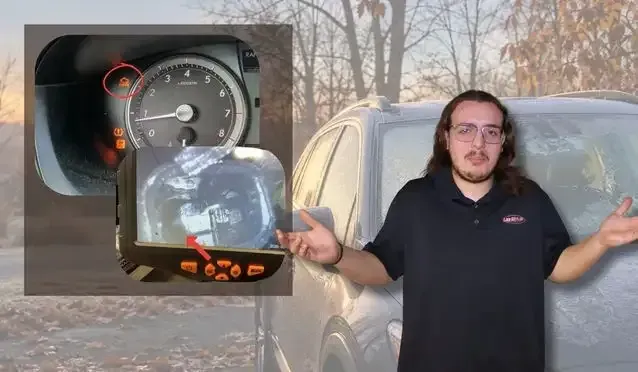
A presenter gestures beside a car, with inset images showing a dashboard gauge and a handheld diagnostic device.
November 18, 2026
Your dashboard lights up. Your car starts making a new noise. Something smells weird. And your immediate question is probably: “Can I keep driving my car like this?” Sometimes the answer is yes—for now. Sometimes it’s “schedule an appointment.” And sometimes it’s “pull over and shut the car off.” Here are six warning signs that can help you know the difference. 1. Flashing Check Engine Light STOP DRIVING Can you drive with a flashing Check Engine Light? You shouldn’t keep driving normally. A flashing Check Engine Light can indicate an active misfire severe enough to damage the catalytic converter. Find a safe place to pull over and shut the vehicle off. What about a solid Check Engine Light when the car seems to run normally? SCHEDULE IT It still needs attention, but it doesn’t always mean you need to stop immediately. 2. Temperature Gauge Suddenly in the Red STOP DRIVING If your temperature gauge climbs into the red or you see an overheating warning, continuing to drive can cause serious engine damage. Pull over safely and shut the engine off. Don’t open a hot cooling system. 3. Oil-Pressure Warning Light STOP DRIVING The oil-pressure warning light is different from an oil-change reminder. Low oil pressure can mean the engine isn’t getting the lubrication it needs. Continuing to drive could cause major engine damage. 4. Smoke Coming From Your Car STOP DRIVING Smoke from under the hood, exhaust, or another area of the vehicle deserves immediate attention—especially if it’s accompanied by a warning light, overheating, loss of power, or a strong smell. Pull over somewhere safe and shut the vehicle off. 5. Sudden Loss of Power STOP DRIVING If your car suddenly loses significant power, struggles to accelerate, or behaves unpredictably, don’t try to push it the rest of the way down Route 422 just to make it home. Get somewhere safe and have the vehicle evaluated. 6. A New Noise or Smell This one depends on what you’re experiencing. SCHEDULE IT: A small new noise while the vehicle otherwise drives normally. STOP DRIVING: Burning smells, strong fuel odors, smoke, major grinding, or a symptom that suddenly affects how the vehicle drives.
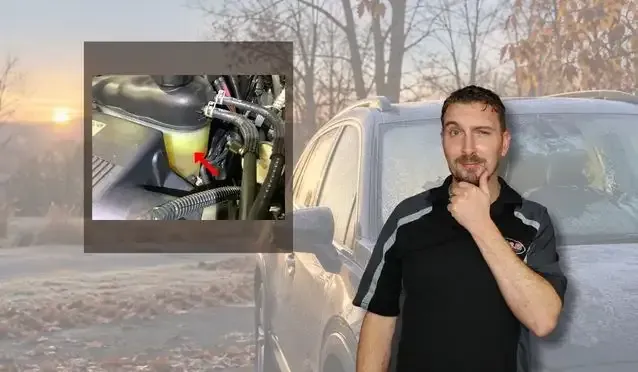
A man in a black shirt stands beside a vehicle, with an inset showing its open engine compartment.
By Lee Myles Auto Care & Transmissions • November 11, 2026
You turn the heat all the way up. The fan is blasting. Ten minutes later, you’re still driving through Berks County wearing gloves inside your car.
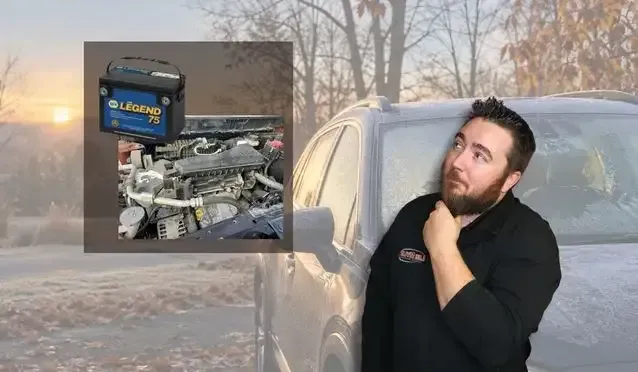
A man in black stands beside a silver vehicle, hand on chin; an inset shows an engine bay with a battery.
By Lee Myles Auto Care & Transmissions • November 4, 2026
It’s a cold morning in Berks County. You start the car, turn the heat up, and let it sit while you finish getting ready.
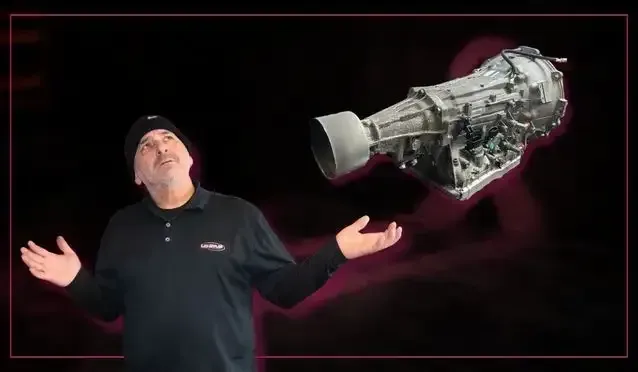
A presenter gestures beside a floating cutaway model of a mechanical assembly against a dark background.
By Lee Myles Auto Care & Transmissions • October 28, 2026
“My transmission is going.”
A person in a bright pink shirt stands with arms crossed beside two inset photos of a gray device.
By Lee Myles Auto Care & Transmissions • October 21, 2026
There are some automotive myths that are harmless.
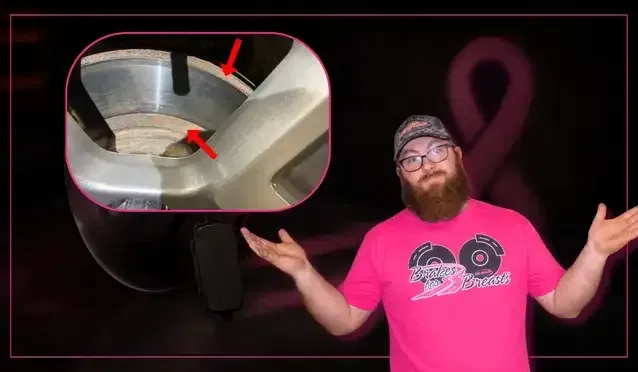
A bearded presenter gestures beside an inset close-up of a metal device with red arrows pointing to its parts.
By Lee Myles Auto Care & Transmissions • October 14, 2026
One of the most common questions people have when they hear they need brakes is:
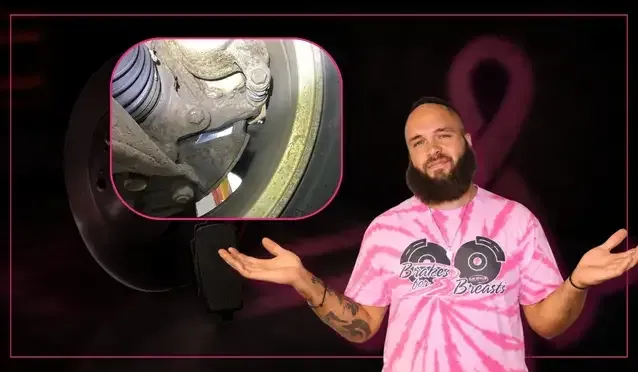
Bearded presenter in a pink graphic shirt gestures toward an inset close-up of a mechanical part.
By Lee Myles Auto Care & Transmissions • October 7, 2026
Your car should not have its own soundtrack.

Two smiling people in matching pink shirts pose beside a vinyl record and pink ribbon, with a breast cancer awareness logo.
By Lee Myles Auto Care & Transmissions • September 30, 2026
October is here, which means Brakes for Breasts is back at Lee Myles Southeast PA.

A man gives two thumbs up beside an inset showing a hand holding a small glass of red liquid.
By Lee Myles Auto Care & Transmissions • September 23, 2026
If you've ever searched, "Why is my car shifting weird?" or "My transmission hesitates when I accelerate," you're not alone.
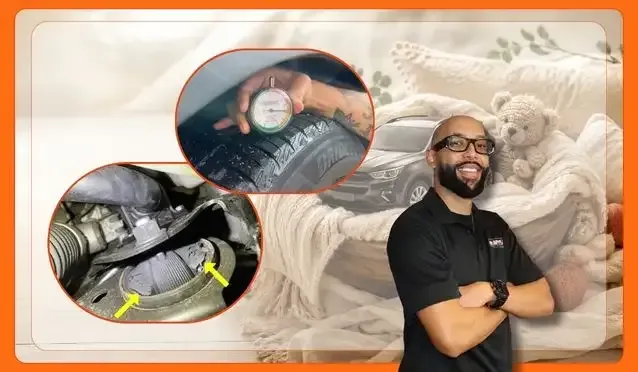
Smiling technician in a black shirt stands beside two circular close-ups of equipment, framed by a warm orange border.
By Lee Myles Auto Care & Transmissions • September 16, 2026
When people think about keeping their family safe in the car, they usually think about car seats, booster seats, and making sure everyone is buckled up.

Show More