Keeping Your Engine Alive: Why Regular Oil Changes are Crucial Preventative Maintenance

Lee Myles Auto Care & Transmission • August 6, 2025

Share this article

You probably hear it all the time: "Get your oil changed!" But why is this seemingly simple task so important for your vehicle's health? At Lee Myles Auto Care & Transmissions in Berks County, PA, we're here to break down why a regular oil change isn't just a chore, it's the absolute backbone of your car's  preventative maintenance  program. Think of it as the lifeblood of your engine! 

What Does Engine Oil Actually Do? More Than You Think! 

Your car's engine is a complex system of moving metal parts, creating immense friction and heat. That's where engine oil comes in. Its primary jobs are: 

  1. Lubrication:  Oil creates a thin layer between moving parts (like pistons and crankshafts), reducing friction and preventing them from grinding against each other. Without proper lubrication, these parts wear down incredibly fast, leading to costly engine repair. 
  2. Cooling:  Believe it or not, engine oil helps dissipate heat generated by friction and combustion. It carries heat away from critical components, preventing your engine from overheating. 
  3. Cleaning:  As oil circulates, it picks up dirt, sludge, and microscopic metal particles – byproducts of combustion and wear. It holds these contaminants in suspension until they can be removed during an oil change. 
  4. Corrosion Prevention:  Oil contains additives that help prevent rust and corrosion, protecting vital metal components inside your engine. 

Why "Dirty" Oil is a Big Problem for Your Engine 

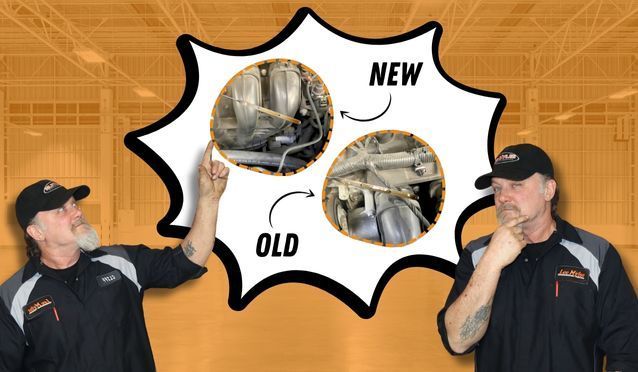
Over time, your engine oil breaks down. Its additives deplete, its viscosity changes, and it becomes saturated with all the contaminants it's collected. When oil gets old and dirty: 

  • It loses its lubricating properties:  Friction increases, causing more wear and tear on crucial engine parts. This is a direct path to premature engine wear. 
  • Its cooling ability diminishes:  Your engine runs hotter, increasing the risk of overheating and associated damage. 
  • It becomes sludge:  The dirt and debris can clump together, forming thick sludge that clogs oil passages. This can starve parts of lubrication entirely, leading to catastrophic engine failure. 
  • Corrosion protection weakens:  Leaving your engine vulnerable to rust. 

This is why regular  oil changes  are the ultimate form of preventative maintenance. They ensure your engine always has fresh, clean oil performing at its peak, extending its lifespan and preventing expensive auto repair. 

 Demystifying Your Oil Change: Answers to Your Top Questions 

We know you've got questions about this vital service, and we're here to clear up the confusion and help you make informed decisions. 

One of the most common inquiries we get is "How often should I get my oil changed?" This isn't a one-size-fits-all answer; it depends on your vehicle's make, model, the type of oil (conventional, synthetic blend, or full synthetic oil), and your driving habits. Modern cars with synthetic oil might go 7,500 to 10,000 miles, while others might need it every 3,000 to 5,000 miles. Always check your owner's manual – it's your definitive guide! 

Drivers also frequently ask, "What type of oil should I use?" Your owner's manual specifies the correct viscosity (like 5W-30) and type. We often recommend synthetic oil for its superior protection in extreme temperatures and longer oil change intervals. It’s a smart investment in your engine's longevity. 

Sometimes, drivers will inquire, "Can I just top off my oil instead of changing it?" While adding oil is good if levels are low between changes, it's  not  a substitute for a complete oil change. Old engine oil is full of contaminants and degraded properties; simply adding new oil won't remove the harmful sludge and particles already circulating. 

Finally, you might consider, "Why choose a professional for my oil change?" Bringing your vehicle to a professional service center like Lee Myles Auto Care & Transmissions ensures the correct oil type and filter are used, proper disposal of old oil, and a quick inspection for other potential issues like leaks or fluid levels. It's part of a comprehensive, expert car service experience for your peace of mind. 

Don't Wait for Trouble – Visit Lee Myles Today! 

Ignoring your oil change schedule is like ignoring your engine's heartbeat. It might seem fine for a while, but eventually, you'll face serious consequences. Regular oil changes are a small investment that pays off huge in the long run by preventing costly breakdowns and extending your vehicle's life. 

At Lee Myles Auto Care & Transmissions, we make oil changes easy and efficient. Our skilled technicians will use the right oil for your vehicle and ensure everything is running smoothly. Keep your car healthy and reliable with essential preventative maintenance!  Contact us today!

Recent Posts

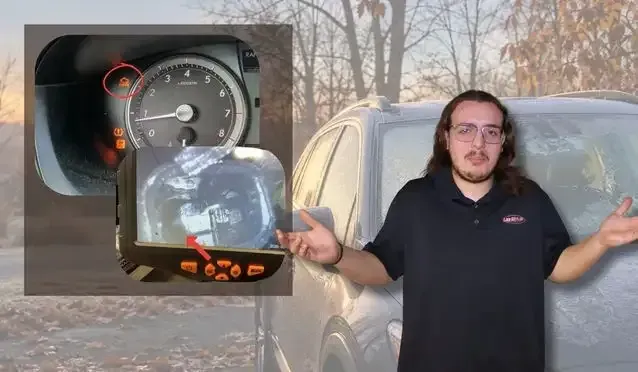
A presenter gestures beside a car, with inset images showing a dashboard gauge and a handheld diagnostic device.
November 18, 2026
Your dashboard lights up. Your car starts making a new noise. Something smells weird. And your immediate question is probably: “Can I keep driving my car like this?” Sometimes the answer is yes—for now. Sometimes it’s “schedule an appointment.” And sometimes it’s “pull over and shut the car off.” Here are six warning signs that can help you know the difference. 1. Flashing Check Engine Light STOP DRIVING Can you drive with a flashing Check Engine Light? You shouldn’t keep driving normally. A flashing Check Engine Light can indicate an active misfire severe enough to damage the catalytic converter. Find a safe place to pull over and shut the vehicle off. What about a solid Check Engine Light when the car seems to run normally? SCHEDULE IT It still needs attention, but it doesn’t always mean you need to stop immediately. 2. Temperature Gauge Suddenly in the Red STOP DRIVING If your temperature gauge climbs into the red or you see an overheating warning, continuing to drive can cause serious engine damage. Pull over safely and shut the engine off. Don’t open a hot cooling system. 3. Oil-Pressure Warning Light STOP DRIVING The oil-pressure warning light is different from an oil-change reminder. Low oil pressure can mean the engine isn’t getting the lubrication it needs. Continuing to drive could cause major engine damage. 4. Smoke Coming From Your Car STOP DRIVING Smoke from under the hood, exhaust, or another area of the vehicle deserves immediate attention—especially if it’s accompanied by a warning light, overheating, loss of power, or a strong smell. Pull over somewhere safe and shut the vehicle off. 5. Sudden Loss of Power STOP DRIVING If your car suddenly loses significant power, struggles to accelerate, or behaves unpredictably, don’t try to push it the rest of the way down Route 422 just to make it home. Get somewhere safe and have the vehicle evaluated. 6. A New Noise or Smell This one depends on what you’re experiencing. SCHEDULE IT: A small new noise while the vehicle otherwise drives normally. STOP DRIVING: Burning smells, strong fuel odors, smoke, major grinding, or a symptom that suddenly affects how the vehicle drives.
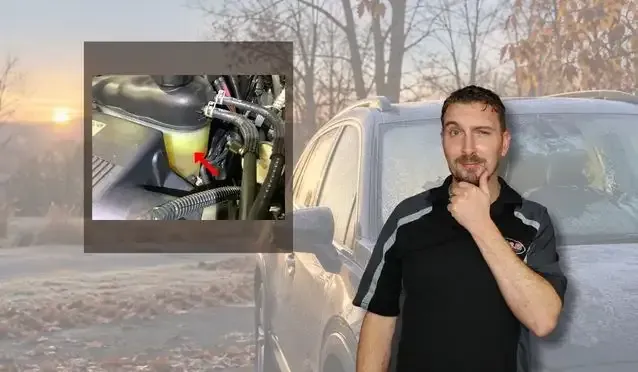
A man in a black shirt stands beside a vehicle, with an inset showing its open engine compartment.
By Lee Myles Auto Care & Transmissions • November 11, 2026
You turn the heat all the way up. The fan is blasting. Ten minutes later, you’re still driving through Berks County wearing gloves inside your car.
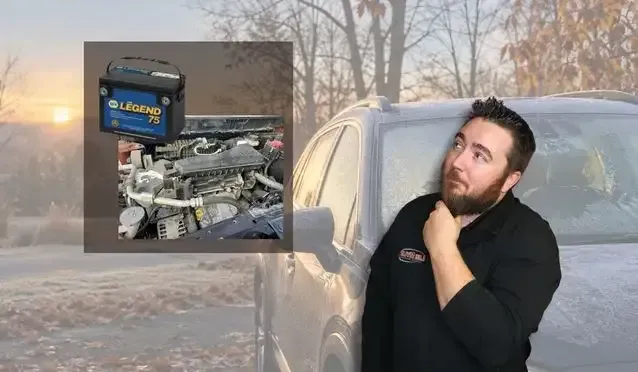
A man in black stands beside a silver vehicle, hand on chin; an inset shows an engine bay with a battery.
By Lee Myles Auto Care & Transmissions • November 4, 2026
It’s a cold morning in Berks County. You start the car, turn the heat up, and let it sit while you finish getting ready.

A presenter gestures beside a floating cutaway model of a mechanical assembly against a dark background.
By Lee Myles Auto Care & Transmissions • October 28, 2026
“My transmission is going.”
A person in a bright pink shirt stands with arms crossed beside two inset photos of a gray device.
By Lee Myles Auto Care & Transmissions • October 21, 2026
There are some automotive myths that are harmless.
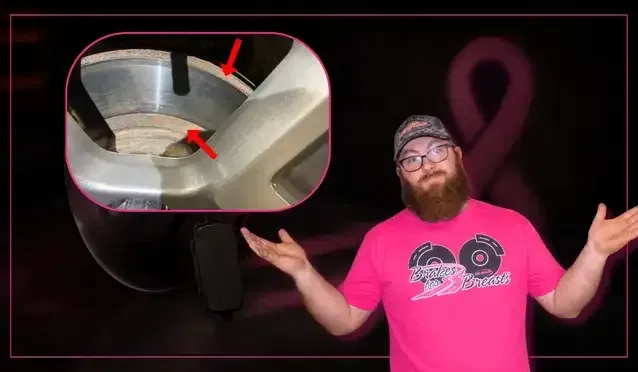
A bearded presenter gestures beside an inset close-up of a metal device with red arrows pointing to its parts.
By Lee Myles Auto Care & Transmissions • October 14, 2026
One of the most common questions people have when they hear they need brakes is:
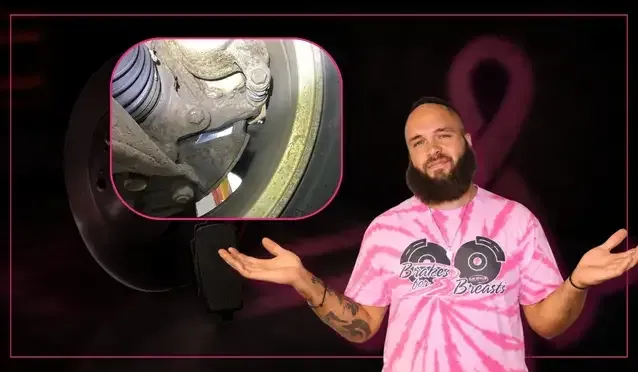
Bearded presenter in a pink graphic shirt gestures toward an inset close-up of a mechanical part.
By Lee Myles Auto Care & Transmissions • October 7, 2026
Your car should not have its own soundtrack.

Two smiling people in matching pink shirts pose beside a vinyl record and pink ribbon, with a breast cancer awareness logo.
By Lee Myles Auto Care & Transmissions • September 30, 2026
October is here, which means Brakes for Breasts is back at Lee Myles Southeast PA.

A man gives two thumbs up beside an inset showing a hand holding a small glass of red liquid.
By Lee Myles Auto Care & Transmissions • September 23, 2026
If you've ever searched, "Why is my car shifting weird?" or "My transmission hesitates when I accelerate," you're not alone.
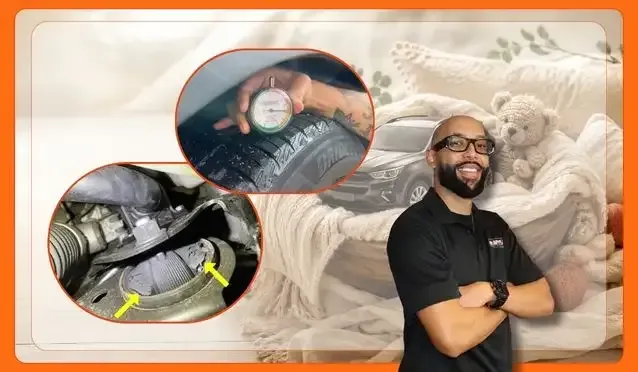
Smiling technician in a black shirt stands beside two circular close-ups of equipment, framed by a warm orange border.
By Lee Myles Auto Care & Transmissions • September 16, 2026
When people think about keeping their family safe in the car, they usually think about car seats, booster seats, and making sure everyone is buckled up.

Show More