Wheels 101: Understanding Alignment, Balancing, and When Your Car Needs It

Lee Myles Auto Care & Transmissions • September 10, 2025

Share this article

Have you ever noticed your car pulling to one side or a mysterious vibration at highway speeds? These common issues can feel like a minor annoyance, but they’re often a sign that your vehicle needs professional care. Understanding the difference between a wheel alignment and a tire balancing can save you from bigger problems down the road. 

What’s the difference, and why does my steering wheel shake? 

This is one of the most common questions we get, and it’s a great one. While both services relate to your wheels, they solve different problems. 

  • Tire balancing  deals with weight. A tire and wheel assembly can have tiny weight imbalances that cause it to wobble as it spins at high speeds. This is usually the culprit when your steering wheel shakes or you feel vibrations in your seat or floorboards, especially around 55-60 mph. 
  • Wheel alignment  deals with angles. It's the process of adjusting your vehicle's suspension so that all four wheels are pointing in the exact right direction relative to each other and the road. This is crucial for proper handling and preventing uneven tire wear. 

So, to answer the question, a shaking steering wheel is a classic sign you need your tires balanced. If your car pulls to one side, you most likely need a wheel alignment. 

Signs You Need an Alignment or Balancing 

Staying on top of your car’s needs is the best way to prevent expensive auto repair. Here are the key warning signs to look for: 

Signs you need a wheel alignment: 

  • Your vehicle consistently pulls or drifts to one side. 
  • Your steering wheel isn't centered when you're driving straight. 
  • You notice uneven or accelerated tire wear. 
  • You hear squealing tires, especially when turning. 

Signs you need tire balancing: 

  • You feel vibrations in the steering wheel, seat, or floorboards. 
  • The vibrations get worse at certain speeds, typically between 55-60 mph. 
  • You notice abnormal, "cupping" tire wear. 

Why Do These Issues Happen? 

The two most common causes for both of these services are everyday driving hazards. Hitting a pothole, bumping a curb, or running over road debris can throw your alignment and balancing off. Additionally, installing a new set of tires, performing suspension work, or even just routine tire rotations can create a need for these adjustments. If you just hit a pothole in Reading, PA, or anywhere in Berks County, it’s a good idea to have your car checked. 

Trust the Experts at Lee Myles 

Proper wheel alignment and tire balancing are not something you want to guess at. It requires precision equipment and expertise. At Lee Myles Auto Care & Transmissions, we use state-of-the-art technology to ensure your wheels and tires are perfectly aligned and balanced for a smooth, safe ride. We’re dedicated to providing honest, top-notch service to the Berks County community. 

Whether you've noticed a new vibration or you're just due for a tire rotation, our skilled technicians are here to help. Taking a proactive approach to your car’s maintenance not only improves performance but also extends the life of your tires, saving you money in the long run. 

Ready to get back on the road with a smooth and safe ride?  Schedule an appointment  with our expert technicians at Lee Myles Auto Care & Transmissions. We have four convenient locations in Berks County to serve you: Reading, PA 19607; Birdsboro, PA 19508; Sinking Spring, PA 19608; and Wyomissing, PA 19610. Our team is ready to provide the professional service you and your vehicle deserve.

Recent Posts

A presenter gestures beside a car, with inset images showing a dashboard gauge and a handheld diagnostic device.
November 18, 2026
Your dashboard lights up. Your car starts making a new noise. Something smells weird. And your immediate question is probably: “Can I keep driving my car like this?” Sometimes the answer is yes—for now. Sometimes it’s “schedule an appointment.” And sometimes it’s “pull over and shut the car off.” Here are six warning signs that can help you know the difference. 1. Flashing Check Engine Light STOP DRIVING Can you drive with a flashing Check Engine Light? You shouldn’t keep driving normally. A flashing Check Engine Light can indicate an active misfire severe enough to damage the catalytic converter. Find a safe place to pull over and shut the vehicle off. What about a solid Check Engine Light when the car seems to run normally? SCHEDULE IT It still needs attention, but it doesn’t always mean you need to stop immediately. 2. Temperature Gauge Suddenly in the Red STOP DRIVING If your temperature gauge climbs into the red or you see an overheating warning, continuing to drive can cause serious engine damage. Pull over safely and shut the engine off. Don’t open a hot cooling system. 3. Oil-Pressure Warning Light STOP DRIVING The oil-pressure warning light is different from an oil-change reminder. Low oil pressure can mean the engine isn’t getting the lubrication it needs. Continuing to drive could cause major engine damage. 4. Smoke Coming From Your Car STOP DRIVING Smoke from under the hood, exhaust, or another area of the vehicle deserves immediate attention—especially if it’s accompanied by a warning light, overheating, loss of power, or a strong smell. Pull over somewhere safe and shut the vehicle off. 5. Sudden Loss of Power STOP DRIVING If your car suddenly loses significant power, struggles to accelerate, or behaves unpredictably, don’t try to push it the rest of the way down Route 422 just to make it home. Get somewhere safe and have the vehicle evaluated. 6. A New Noise or Smell This one depends on what you’re experiencing. SCHEDULE IT: A small new noise while the vehicle otherwise drives normally. STOP DRIVING: Burning smells, strong fuel odors, smoke, major grinding, or a symptom that suddenly affects how the vehicle drives.
A man in a black shirt stands beside a vehicle, with an inset showing its open engine compartment.
By Lee Myles Auto Care & Transmissions • November 11, 2026
You turn the heat all the way up. The fan is blasting. Ten minutes later, you’re still driving through Berks County wearing gloves inside your car.
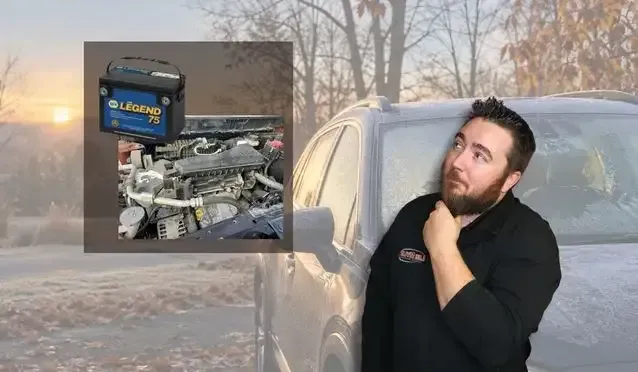
A man in black stands beside a silver vehicle, hand on chin; an inset shows an engine bay with a battery.
By Lee Myles Auto Care & Transmissions • November 4, 2026
It’s a cold morning in Berks County. You start the car, turn the heat up, and let it sit while you finish getting ready.
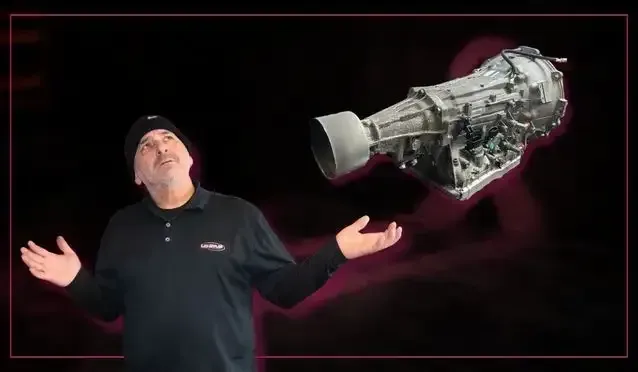
A presenter gestures beside a floating cutaway model of a mechanical assembly against a dark background.
By Lee Myles Auto Care & Transmissions • October 28, 2026
“My transmission is going.”
A person in a bright pink shirt stands with arms crossed beside two inset photos of a gray device.
By Lee Myles Auto Care & Transmissions • October 21, 2026
There are some automotive myths that are harmless.
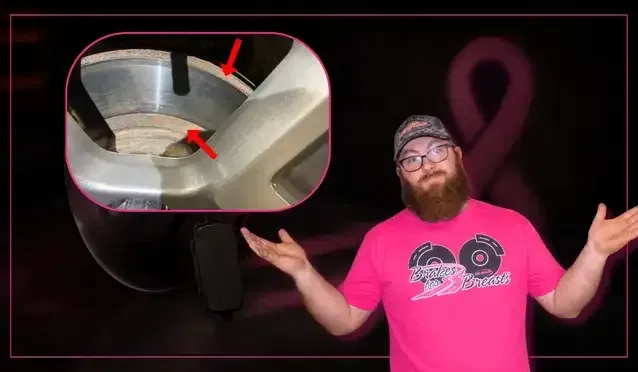
A bearded presenter gestures beside an inset close-up of a metal device with red arrows pointing to its parts.
By Lee Myles Auto Care & Transmissions • October 14, 2026
One of the most common questions people have when they hear they need brakes is:
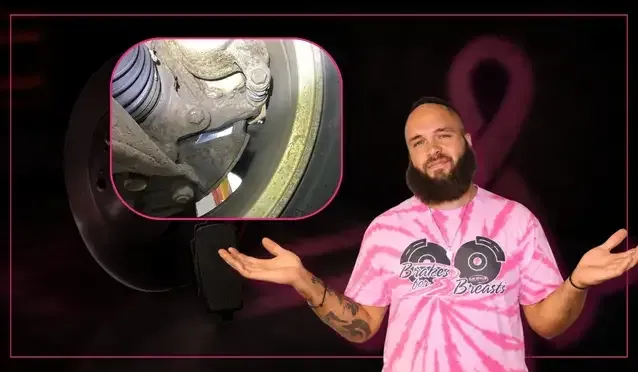
Bearded presenter in a pink graphic shirt gestures toward an inset close-up of a mechanical part.
By Lee Myles Auto Care & Transmissions • October 7, 2026
Your car should not have its own soundtrack.
Two smiling people in matching pink shirts pose beside a vinyl record and pink ribbon, with a breast cancer awareness logo.
By Lee Myles Auto Care & Transmissions • September 30, 2026
October is here, which means Brakes for Breasts is back at Lee Myles Southeast PA.
A man gives two thumbs up beside an inset showing a hand holding a small glass of red liquid.
By Lee Myles Auto Care & Transmissions • September 23, 2026
If you've ever searched, "Why is my car shifting weird?" or "My transmission hesitates when I accelerate," you're not alone.
Smiling technician in a black shirt stands beside two circular close-ups of equipment, framed by a warm orange border.
By Lee Myles Auto Care & Transmissions • September 16, 2026
When people think about keeping their family safe in the car, they usually think about car seats, booster seats, and making sure everyone is buckled up.

Show More