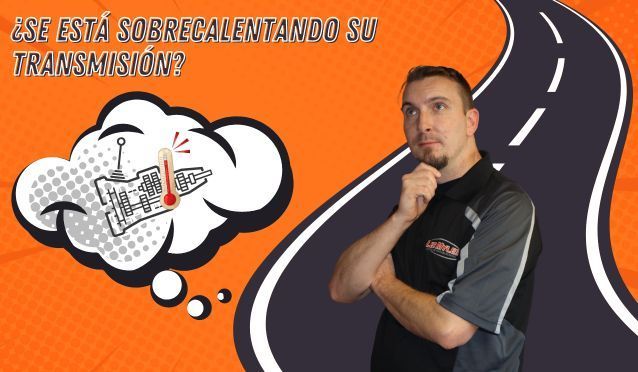
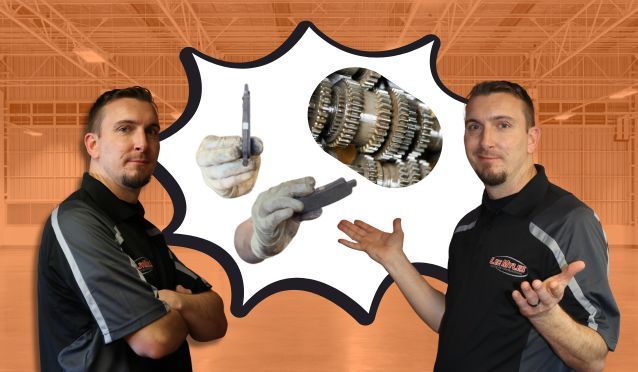
¿Se Está Sobrecalentando Su Transmisión? El Sorprendente Papel de los Frenos Arrastrados

Lee Myles Auto Care & Transmissions • October 22, 2025

Share this article

¡Hola, conductores del Condado de Berks! Cuando escuche un chirrido o sienta un temblor al reducir la velocidad, su primer pensamiento probablemente sea: "Necesito un trabajo de frenos". ¡Y podría tener razón! Los frenos son su sistema de seguridad número uno. 

Pero aquí en  Lee Myles Auto Care & Transmissions  en Reading, Birdsboro, Sinking Spring y Wyomissing, nos especializamos en todo el tren motriz. Lo que muchas personas no saben es que los problemas con sus frenos pueden dañar la transmisión de manera silenciosa y grave. 

¿Cómo pueden sus frenos dañar su transmisión? Profundicemos en la sorprendente conexión y le mostraremos por qué un pequeño problema de frenos puede convertirse en un enorme gasto de transmisión. 

1. La Temperatura Sube: El Peligro de los Frenos "Arrastrados"

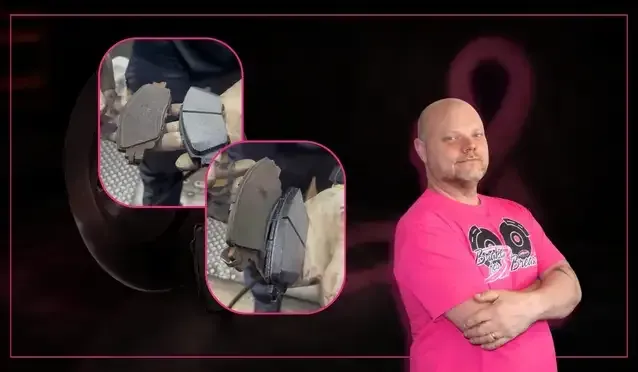
Uno de los problemas más comunes que vemos son los frenos arrastrados. Esto sucede cuando las pastillas de freno permanecen en contacto constante y ligero con los rotores, incluso cuando quita el pie del pedal. Podría deberse a un pistón de la mordaza (caliper) atascado, una manguera de freno colapsada internamente o un freno de mano que no se liberó por completo. 

¿Qué le hace esto a su transmisión? 

  • Aumento de Carga y Esfuerzo:  Su motor y la transmisión automática tienen que trabajar mucho más para superar esta resistencia constante. Esto ejerce una tensión significativa en el convertidor de par y en las piezas internas de la transmisión. 
  • Calor Excesivo:  El trabajo adicional genera más calor en todo el tren motriz.  ¡El calor es el asesino final de una transmisión automática!  Descompone rápidamente el fluido de la transmisión, destruyendo sus propiedades lubricantes y acelerando el desgaste de los embragues, sellos y cojinetes. 
  • Reducción del Ahorro de Combustible:  Su motor está luchando contra los frenos, lo que lo obliga a quemar más combustible. Si ha notado un peor rendimiento de la gasolina, los frenos arrastrados podrían ser los culpables. 

Pregunta de Búsqueda Común:   ¿Por qué mi auto está perezoso incluso después de soltar el freno?  Es probable que la causa sean los  frenos  arrastrados. 

2. Frenado Desigual y Estrés en el Tren Motriz

Si una mordaza se agarrota por completo o un freno se arrastra más que los demás, se crea un desequilibrio. Este es un gran problema, especialmente para los vehículos modernos con sistemas AWD, FWD o RWD. 

  • Esfuerzo del Diferencial:  El diferencial (delantero, trasero o central) se ve obligado a trabajar horas extras para compensar la diferencia en la velocidad de las ruedas causada por el frenado desigual. Esto ejerce calor y estrés adicionales sobre el diferencial, que está conectado directamente a la transmisión o la caja de transferencia. 
  • Sistemas de Control Confundidos:  Los vehículos modernos dependen de los sensores de velocidad de las ruedas y de los frenos para el Control de Tracción y la Vectorización de Par. Un freno defectuoso puede confundir la computadora del automóvil, lo que lleva a una entrega de potencia incorrecta que estresa innecesariamente la transmisión. 

3. La Señal Silenciosa: Un Interruptor de Luces de Freno Defectuoso

El interruptor de las luces de freno hace algo más que encender las luces traseras. Envía una señal crucial a la computadora principal de su automóvil y a la Unidad de Control de la Transmisión (TCU). 

  • Problemas de Cambio:  Si el interruptor falla, es posible que la TCU no vea la señal de "freno aplicado". Esto puede impedirle sacar la palanca de cambios de la posición de  Park. Si su auto está atascado en  Park , ¡revise el interruptor de las luces de freno! 
  • Problemas con el Convertidor de Par:  La TCU utiliza esta señal para controlar el embrague de bloqueo del convertidor de par. Si el interruptor funciona mal, el convertidor de par podría desbloquearse con demasiada frecuencia, creando calor y deslizamiento excesivos, o podría no desbloquearse por completo, lo que provocaría que el motor se detenga o funcione con dificultad al detenerse. 

Proteja Su Tren Motriz con una Inspección Profesional de Frenos 

No espere a que su transmisión le diga que sus frenos están mal. Si experimenta ruidos, vibraciones o un rendimiento reducido, su tren motriz ya está bajo estrés. 

Nuestros técnicos certificados en  Lee Myles Auto Care & Transmissions  se especializan en inspeccionar todo el sistema de frenado y tren motriz en busca de estos problemas ocultos. Ya sea que se encuentre en  Reading, PA 19607 ;  Birdsboro, PA 19508 ;  Sinking Spring, PA 19608 ; o  Wyomissing, PA 19610 , brindamos evaluaciones honestas y reparación experta de frenos. 

¿Pueden unos frenos en mal estado arruinar mi transmisión?  Sí, a través del calor y el esfuerzo, ¡absolutamente pueden! 

Proteja su vehículo y su billetera  programando  una inspección completa hoy. ¡Su transmisión se lo agradecerá! 

Recent Posts

A presenter gestures beside a car, with inset images showing a dashboard gauge and a handheld diagnostic device.
November 18, 2026
Your dashboard lights up. Your car starts making a new noise. Something smells weird. And your immediate question is probably: “Can I keep driving my car like this?” Sometimes the answer is yes—for now. Sometimes it’s “schedule an appointment.” And sometimes it’s “pull over and shut the car off.” Here are six warning signs that can help you know the difference. 1. Flashing Check Engine Light STOP DRIVING Can you drive with a flashing Check Engine Light? You shouldn’t keep driving normally. A flashing Check Engine Light can indicate an active misfire severe enough to damage the catalytic converter. Find a safe place to pull over and shut the vehicle off. What about a solid Check Engine Light when the car seems to run normally? SCHEDULE IT It still needs attention, but it doesn’t always mean you need to stop immediately. 2. Temperature Gauge Suddenly in the Red STOP DRIVING If your temperature gauge climbs into the red or you see an overheating warning, continuing to drive can cause serious engine damage. Pull over safely and shut the engine off. Don’t open a hot cooling system. 3. Oil-Pressure Warning Light STOP DRIVING The oil-pressure warning light is different from an oil-change reminder. Low oil pressure can mean the engine isn’t getting the lubrication it needs. Continuing to drive could cause major engine damage. 4. Smoke Coming From Your Car STOP DRIVING Smoke from under the hood, exhaust, or another area of the vehicle deserves immediate attention—especially if it’s accompanied by a warning light, overheating, loss of power, or a strong smell. Pull over somewhere safe and shut the vehicle off. 5. Sudden Loss of Power STOP DRIVING If your car suddenly loses significant power, struggles to accelerate, or behaves unpredictably, don’t try to push it the rest of the way down Route 422 just to make it home. Get somewhere safe and have the vehicle evaluated. 6. A New Noise or Smell This one depends on what you’re experiencing. SCHEDULE IT: A small new noise while the vehicle otherwise drives normally. STOP DRIVING: Burning smells, strong fuel odors, smoke, major grinding, or a symptom that suddenly affects how the vehicle drives.
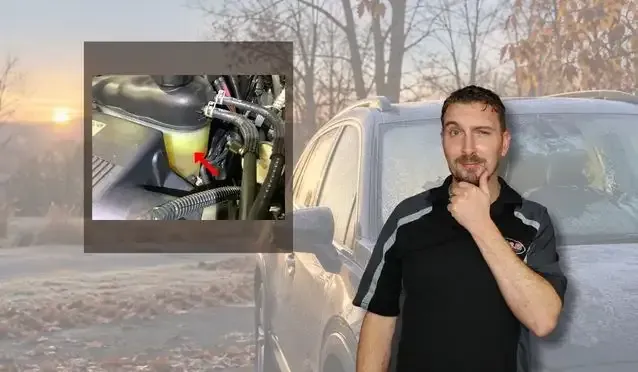
A man in a black shirt stands beside a vehicle, with an inset showing its open engine compartment.
By Lee Myles Auto Care & Transmissions • November 11, 2026
You turn the heat all the way up. The fan is blasting. Ten minutes later, you’re still driving through Berks County wearing gloves inside your car.
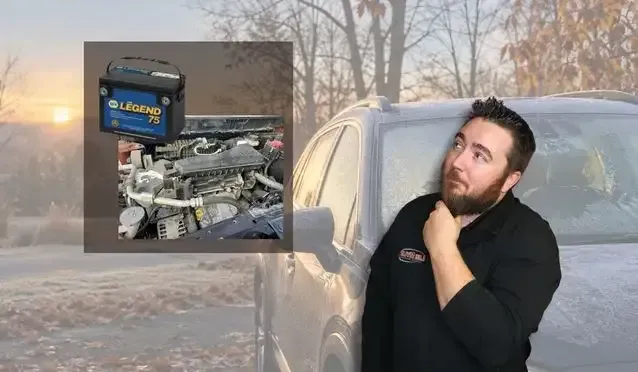
A man in black stands beside a silver vehicle, hand on chin; an inset shows an engine bay with a battery.
By Lee Myles Auto Care & Transmissions • November 4, 2026
It’s a cold morning in Berks County. You start the car, turn the heat up, and let it sit while you finish getting ready.
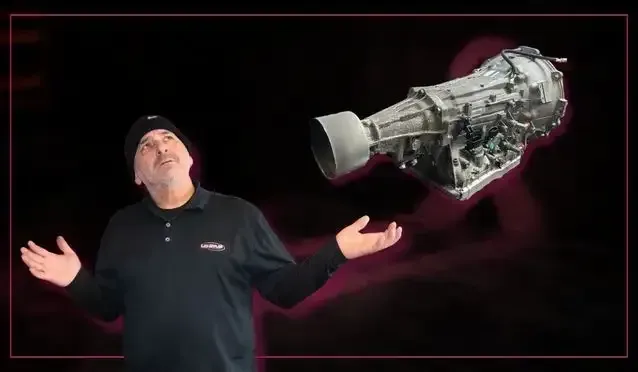
A presenter gestures beside a floating cutaway model of a mechanical assembly against a dark background.
By Lee Myles Auto Care & Transmissions • October 28, 2026
“My transmission is going.”
A person in a bright pink shirt stands with arms crossed beside two inset photos of a gray device.
By Lee Myles Auto Care & Transmissions • October 21, 2026
There are some automotive myths that are harmless.
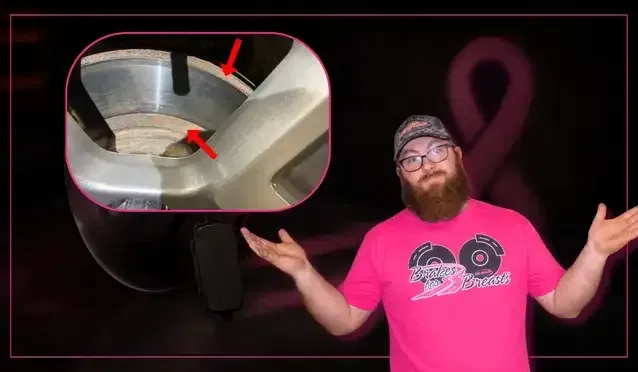
A bearded presenter gestures beside an inset close-up of a metal device with red arrows pointing to its parts.
By Lee Myles Auto Care & Transmissions • October 14, 2026
One of the most common questions people have when they hear they need brakes is:
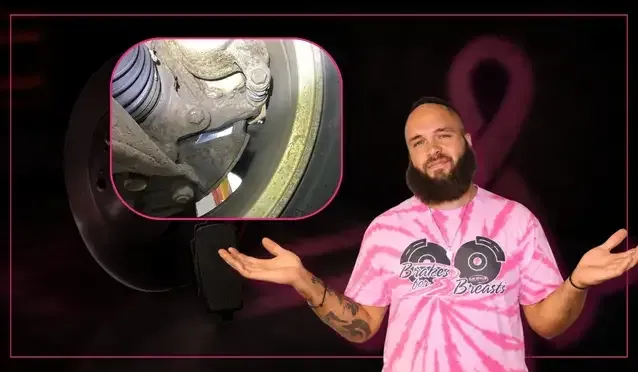
Bearded presenter in a pink graphic shirt gestures toward an inset close-up of a mechanical part.
By Lee Myles Auto Care & Transmissions • October 7, 2026
Your car should not have its own soundtrack.
Two smiling people in matching pink shirts pose beside a vinyl record and pink ribbon, with a breast cancer awareness logo.
By Lee Myles Auto Care & Transmissions • September 30, 2026
October is here, which means Brakes for Breasts is back at Lee Myles Southeast PA.
A man gives two thumbs up beside an inset showing a hand holding a small glass of red liquid.
By Lee Myles Auto Care & Transmissions • September 23, 2026
If you've ever searched, "Why is my car shifting weird?" or "My transmission hesitates when I accelerate," you're not alone.
Smiling technician in a black shirt stands beside two circular close-ups of equipment, framed by a warm orange border.
By Lee Myles Auto Care & Transmissions • September 16, 2026
When people think about keeping their family safe in the car, they usually think about car seats, booster seats, and making sure everyone is buckled up.
Show More